
Shoulder Surgery in Spain – Expert Treatment for Lasting Relief
Restore your mobility and live pain-free again.
Experience advanced shoulder surgery in Spain with one of Europe’s leading orthopedic teams. At Ribera Health Group, we combine surgical precision, cutting-edge technology, and compassionate care to deliver safe, effective, and personalized treatment—so you can regain strength, flexibility, and confidence in your daily life.
Tell us about your case
Please let us know what we can help you with and we will get in touch with you shortly about your case.
Restore your mobility and live pain-free again.
Experience advanced shoulder surgery in Spain with one of Europe’s leading orthopedic teams. At Ribera Health Group, we combine surgical precision, cutting-edge technology, and compassionate care to deliver safe, effective, and personalized treatment—so you can regain strength, flexibility, and confidence in your daily life.
Tell us about your case
Please let us know what we can help you with and we will get in touch with you shortly about your case.
You may be a candidate if you experience:
- Persistent shoulder pain that limits your movement or sleep.
- Difficulty lifting your arm or performing everyday tasks.
- Recurrent shoulder dislocations or chronic instability.
- Degenerative joint disease that hasn’t responded to physiotherapy or medication.
Our surgeons evaluate every case individually, considering your age, activity level, and overall health. Whether you are an athlete seeking to return to performance or a patient wishing to restore daily comfort, we design a personalized treatment plan that fits your goals.
Most procedures are performed under regional and general anesthesia for maximum comfort.
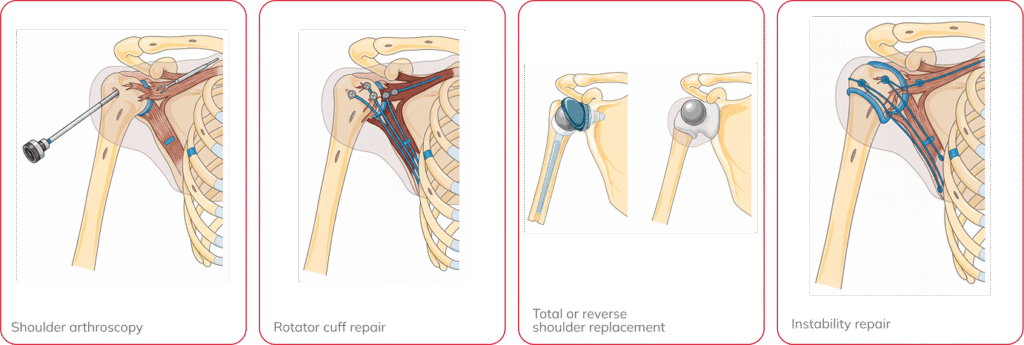
Depending on your diagnosis, the surgery may include:
- Shoulder arthroscopy: A minimally invasive technique using small incisions to repair tendons or remove damaged tissue.
- Rotator cuff repair: Reconstruction of torn tendons to restore strength and motion.
- Total or reverse shoulder replacement: Replacement of the joint with a biocompatible prosthesis for severe arthritis or irreparable damage.
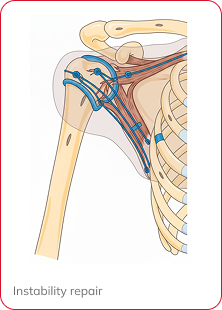
- Instability repair: Tightening or reconstructing the shoulder capsule to prevent future dislocations.
Using navigation systems and high-definition arthroscopy, our specialists ensure precise execution and minimize tissue trauma. Most patients leave the hospital within 24–48 hours.
Recovery Time and Success Rates

Recovery Time: Rehabilitation begins shortly after surgery. Most patients regain functional movement within 4-6 weeks and return to daily activities in 2-3 months, depending on the procedure. Our physiotherapy team will design a customized recovery plan and provide online follow-up for international patients.

Success Rates: Ribera’s shoulder surgery program achieves a 97% functional recovery rate, with high patient satisfaction and low complication rates. Patients often experience dramatic pain reduction and improved range of motion within weeks.
Advantages Over Other Hospitals
- Expertise in arthroscopic and prosthetic shoulder surgery performed by internationally recognized surgeons.
- Use of 3D surgical planning and minimally invasive techniques for faster healing.
- Comprehensive rehabilitation programs supervised by specialized physiotherapists.
- Full international patient service, including travel coordination, translation, and tele-rehabilitation.
- Proven excellence within the Ribera Health Group, one of Europe’s most innovative hospital networks.
Pre-Procedure Medical Preparation
- Before surgery, you’ll undergo a full orthopedic evaluation, including X-rays, MRI or CT scans, and blood tests. These help your surgical team understand the exact condition of your shoulder — whether it’s a rotator cuff tear, arthritis, or instability — and plan the most effective approach, from arthroscopy to shoulder replacement.
Fasting
- Do not eat or drink anything (including water, gum, or candy) after midnight the night before your surgery. You may take approved medications with a small sip of water, as instructed by your doctor.
Medications and health conditions
- Some medications, such as blood thinners or diabetes treatments, may need to be paused or adjusted before surgery. Please provide your doctor with a complete list of current medications and any allergies or chronic health conditions.
Smoking and Alcohol
- Avoid smoking and alcohol for several days before surgery, as they can slow tissue healing and increase the risk of complications.
Physical Preparation
- Your surgeon may recommend light shoulder and posture exercises before the procedure to improve postoperative recovery. Patients are also encouraged to maintain a healthy diet and stay hydrated in the weeks leading up to surgery.
Logistics and Comfort
- Wear loose, comfortable clothing that opens at the front, and remove jewelry, lotions, and deodorants on the day of surgery. If you’re traveling from abroad, Ribera’s international team will assist with hotel and transport arrangements. You’ll need someone to accompany you or transportation back to your accommodation after discharge.
Confirm Consent and Questions
- Before surgery, you’ll review and sign a consent form and receive clear written and verbal instructions. This is a good opportunity to discuss the type of anesthesia, expected recovery time, and any last-minute questions you may have.
Postoperative Hospital Care
- Most shoulder surgeries are performed under general anesthesia with regional nerve block for comfort. Depending on the complexity of the procedure, you’ll stay in the hospital for one to three days. Your shoulder will be supported in a sling or immobilizer, and you’ll begin gentle movement exercises under supervision.
Medications
- You’ll receive pain-relief and anti-inflammatory medication, sometimes combined with antibiotics to prevent infection. It’s crucial to follow your doctor’s instructions carefully and not to stop medications prematurely..
Wound Care ans Hygiene
- Keep the surgical area clean and dry. Avoid submerging the wound in water until the sutures are removed. Showers are usually allowed after a few days with protective dressing. Do not apply creams or ointments unless prescribed.
Physical Activity
- Light daily activities can usually resume after 7–10 days, depending on your procedure. You’ll start physiotherapy to gradually restore movement and strength. Avoid lifting, pushing, or overhead activities for at least six weeks, unless otherwise indicated by your surgeon.
Diet and Lifestyle
- Maintain a balanced diet rich in protein, calcium, and vitamins C and D to promote bone and tissue healing. Stay well hydrated, and continue to avoid alcohol and tobacco during the recovery phase.
Recognizing Warning Signs
Contact your doctor or care coordinator immediately if you experience:
- Sudden or intense shoulder pain not relieved by medication
- Significant swelling or redness around the incision
- Fever or chills
- Fluid leakage, pus, or foul odor from the surgical site
- Numbness or loss of movement in the arm or hand
Follow-Up Appointments
- Your first follow-up visit will typically take place within a week of surgery. Additional reviews and imaging (such as X-rays) will be scheduled to monitor healing. If you are an international patient, these can be arranged virtually through our telemedicine platform.
Shoulder surgery at Ribera Health Group helps patients regain independence, confidence, and quality of life. Our patients often describe their recovery as transformative—free from chronic pain and able to return to sports, work, and daily activities.
Restored Mobility and Strength
Move your arm freely and perform tasks without discomfort.
Pain Relief and Function
Long-lasting improvement that reduces or eliminates the need for pain medication.
Minimally Invasive Techniques
Faster healing, fewer scars, and lower risk of complications.
Comprehensive Support
From pre-operative planning to post-operative rehabilitation, our international team supports you every step of the way.
World-Class Expertise
Our orthopedic surgeons are leaders in shoulder reconstruction, combining clinical excellence with compassionate care.
Choosing Ribera Care International for your shoulder surgery in Spain means trusting a team dedicated to restoring your mobility and well-being with the highest international standards of safety and precision.
Preventative Benefits
Hip replacement not only restores mobility but also prevents further joint damage, reduces the risk of falls, and alleviates strain on surrounding joints.
Suitable for a Wide Range of Patients
Hip replacement surgery is a safe and effective solution for individuals suffering from severe arthritis, joint deterioration, or hip fractures, offering a new lease on life.
Choosing Ribera Health Group for your hip replacement means choosing expert care, world-class facilities, and personalized treatment plans tailored to your needs. Take the first step toward a pain-free, active future with our specialized orthopedic team.
What is shoulder surgery and when is it necessary?
Shoulder surgery is performed to repair or replace damaged structures within the joint, usually when non-surgical treatments like physiotherapy or injections are no longer effective. It’s most commonly indicated for rotator cuff tears, arthritis, shoulder instability, or fractures that affect mobility and cause persistent pain.
What types of shoulder surgery are most common?
The most frequent procedures include arthroscopic tendon repair, rotator cuff reconstruction, labrum stabilization, and total or reverse shoulder replacement. Each technique is chosen based on the patient’s diagnosis, activity level, and degree of tissue damage.
What is the difference between total and reverse shoulder replacement?
In a total shoulder replacement, the ball-and-socket anatomy of the joint is reproduced using biocompatible implants, ideal when the rotator cuff is intact. In a reverse shoulder replacement, the positions are switched to allow other muscles—mainly the deltoid—to move the arm when the rotator cuff is severely damaged.
How long does shoulder surgery take?
The operation typically lasts between one and two hours, depending on its complexity. Arthroscopic procedures are usually shorter, while joint replacements may take slightly longer due to implant placement and reconstruction steps.
What type of anesthesia is used?
Shoulder surgery is usually performed under general anesthesia combined with a regional nerve block, which numbs the arm for 12–24 hours after the procedure. This combination provides comfort during surgery and minimizes pain during the first stage of recovery.
How soon can I start moving my shoulder after surgery?
Gentle passive movements often begin within the first few days, guided by a physiotherapist. Active movement is gradually introduced after two to three weeks, depending on the procedure and the surgeon’s recommendations. Early, supervised motion is key to preventing stiffness.
How long does recovery take after shoulder surgery?
Recovery varies depending on the technique: around 6–8 weeks for arthroscopic repairs and 3–6 months for prosthetic replacements. During this period, physiotherapy is crucial to restore strength, stability, and full range of motion.
Will I need to wear a sling after surgery?
Yes. A shoulder sling or immobilizer is typically used for the first 2–4 weeks to protect the repair and allow tissues to heal. Your surgeon will specify how long you should keep it on and when to remove it for exercises.
What are the potential risks or complications?
Although shoulder surgery is safe and highly effective, rare complications can include infection, stiffness, nerve irritation, or tendon re-tear. These risks are minimized through sterile technique, careful surgical planning, and close postoperative monitoring.
When can I return to sports or physical activity?
Light activities and office work can often resume within 4–6 weeks. Sports or heavy physical work typically require 3–6 months, depending on healing and rehabilitation progress. Patients who follow their physiotherapy plan usually regain full function and return to sports safely.
About Shoulder Surgery
Shoulder surgery encompasses a range of procedures designed to restore function, reduce pain, and improve joint stability. At Ribera, our orthopedic specialists perform both minimally invasive arthroscopic repairs and complex joint replacements, depending on each patient’s condition.
Common indications include rotator cuff tears, shoulder instability or dislocations, arthritis, and fractures. Using advanced imaging and 3D planning systems, we tailor each procedure to the patient’s anatomy and activity goals—achieving exceptional precision and faster recovery.
You may be a candidate if you experience:
- Persistent shoulder pain that limits your movement or sleep.
- Difficulty lifting your arm or performing everyday tasks.
- Recurrent shoulder dislocations or chronic instability.
- Degenerative joint disease that hasn’t responded to physiotherapy or medication.
Our surgeons evaluate every case individually, considering your age, activity level, and overall health. Whether you are an athlete seeking to return to performance or a patient wishing to restore daily comfort, we design a personalized treatment plan that fits your goals.
Most procedures are performed under regional and general anesthesia for maximum comfort.
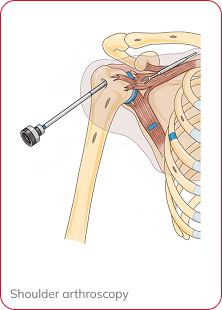
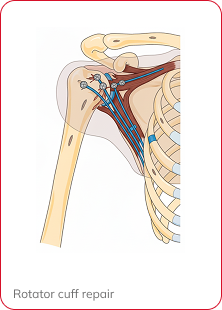
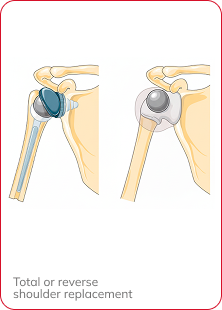
Depending on your diagnosis, the surgery may include:
- Shoulder arthroscopy: A minimally invasive technique using small incisions to repair tendons or remove damaged tissue.
- Rotator cuff repair: Reconstruction of torn tendons to restore strength and motion.
- Total or reverse shoulder replacement: Replacement of the joint with a biocompatible prosthesis for severe arthritis or irreparable damage.
- Instability repair: Tightening or reconstructing the shoulder capsule to prevent future dislocations.
Using navigation systems and high-definition arthroscopy, our specialists ensure precise execution and minimize tissue trauma. Most patients leave the hospital within 24–48 hours.

Relevant Data
Recovery Time and Success Rates
Recovery Time: Rehabilitation begins shortly after surgery. Most patients regain functional movement within 4-6 weeks and return to daily activities in 2-3 months, depending on the procedure. Our physiotherapy team will design a customized recovery plan and provide online follow-up for international patients.
Success Rates: Ribera’s shoulder surgery program achieves a 97% functional recovery rate, with high patient satisfaction and low complication rates. Patients often experience dramatic pain reduction and improved range of motion within weeks.
Advantages Over Other Hospitals
- Expertise in arthroscopic and prosthetic shoulder surgery performed by internationally recognized surgeons.
- Use of 3D surgical planning and minimally invasive techniques for faster healing.
- Comprehensive rehabilitation programs supervised by specialized physiotherapists.
- Full international patient service, including travel coordination, translation, and tele-rehabilitation.
- Proven excellence within the Ribera Health Group, one of Europe’s most innovative hospital networks.
Before and After Care
Pre-Procedure Medical Preparation
- Before surgery, you’ll undergo a full orthopedic evaluation, including X-rays, MRI or CT scans, and blood tests. These help your surgical team understand the exact condition of your shoulder — whether it’s a rotator cuff tear, arthritis, or instability — and plan the most effective approach, from arthroscopy to shoulder replacement.
Fasting
- Do not eat or drink anything (including water, gum, or candy) after midnight the night before your surgery. You may take approved medications with a small sip of water, as instructed by your doctor.
Medications and health conditions
- Some medications, such as blood thinners or diabetes treatments, may need to be paused or adjusted before surgery. Please provide your doctor with a complete list of current medications and any allergies or chronic health conditions.
Smoking and Alcohol
- Avoid smoking and alcohol for several days before surgery, as they can slow tissue healing and increase the risk of complications.
Physical Preparation
- Your surgeon may recommend light shoulder and posture exercises before the procedure to improve postoperative recovery. Patients are also encouraged to maintain a healthy diet and stay hydrated in the weeks leading up to surgery.
Logistics and Comfort
- Wear loose, comfortable clothing that opens at the front, and remove jewelry, lotions, and deodorants on the day of surgery. If you’re traveling from abroad, Ribera’s international team will assist with hotel and transport arrangements. You’ll need someone to accompany you or transportation back to your accommodation after discharge.
Confirm Consent and Questions
- Before surgery, you’ll review and sign a consent form and receive clear written and verbal instructions. This is a good opportunity to discuss the type of anesthesia, expected recovery time, and any last-minute questions you may have.
Postoperative Hospital Care
- Most shoulder surgeries are performed under general anesthesia with regional nerve block for comfort. Depending on the complexity of the procedure, you’ll stay in the hospital for one to three days. Your shoulder will be supported in a sling or immobilizer, and you’ll begin gentle movement exercises under supervision.
Medications
- You’ll receive pain-relief and anti-inflammatory medication, sometimes combined with antibiotics to prevent infection. It’s crucial to follow your doctor’s instructions carefully and not to stop medications prematurely..
Wound Care ans Hygiene
- Keep the surgical area clean and dry. Avoid submerging the wound in water until the sutures are removed. Showers are usually allowed after a few days with protective dressing. Do not apply creams or ointments unless prescribed.
Physical Activity
- Light daily activities can usually resume after 7–10 days, depending on your procedure. You’ll start physiotherapy to gradually restore movement and strength. Avoid lifting, pushing, or overhead activities for at least six weeks, unless otherwise indicated by your surgeon.
Diet and Lifestyle
- Maintain a balanced diet rich in protein, calcium, and vitamins C and D to promote bone and tissue healing. Stay well hydrated, and continue to avoid alcohol and tobacco during the recovery phase.
Recognizing Warning Signs
Contact your doctor or care coordinator immediately if you experience:
- Sudden or intense shoulder pain not relieved by medication
- Significant swelling or redness around the incision
- Fever or chills
- Fluid leakage, pus, or foul odor from the surgical site
- Numbness or loss of movement in the arm or hand
Follow-Up Appointments
- Your first follow-up visit will typically take place within a week of surgery. Additional reviews and imaging (such as X-rays) will be scheduled to monitor healing. If you are an international patient, these can be arranged virtually through our telemedicine platform.
Benefits
Shoulder surgery at Ribera Health Group helps patients regain independence, confidence, and quality of life. Our patients often describe their recovery as transformative—free from chronic pain and able to return to sports, work, and daily activities.
Restored Mobility and Strength
Move your arm freely and perform tasks without discomfort.
Pain Relief and Function
Long-lasting improvement that reduces or eliminates the need for pain medication.
Minimally Invasive Techniques
Faster healing, fewer scars, and lower risk of complications.
Comprehensive Support
From pre-operative planning to post-operative rehabilitation, our international team supports you every step of the way.
World-Class Expertise
Our orthopedic surgeons are leaders in shoulder reconstruction, combining clinical excellence with compassionate care.
Choosing Ribera Care International for your shoulder surgery in Spain means trusting a team dedicated to restoring your mobility and well-being with the highest international standards of safety and precision.
Preventative Benefits
Hip replacement not only restores mobility but also prevents further joint damage, reduces the risk of falls, and alleviates strain on surrounding joints.
Suitable for a Wide Range of Patients
Hip replacement surgery is a safe and effective solution for individuals suffering from severe arthritis, joint deterioration, or hip fractures, offering a new lease on life.
Choosing Ribera Health Group for your hip replacement means choosing expert care, world-class facilities, and personalized treatment plans tailored to your needs. Take the first step toward a pain-free, active future with our specialized orthopedic team.
FAQs
What is shoulder surgery and when is it necessary?
Shoulder surgery is performed to repair or replace damaged structures within the joint, usually when non-surgical treatments like physiotherapy or injections are no longer effective.
It’s most commonly indicated for rotator cuff tears, arthritis, shoulder instability, or fractures that affect mobility and cause persistent pain.
What types of shoulder surgery are most common?
The most frequent procedures include arthroscopic tendon repair, rotator cuff reconstruction, labrum stabilization, and total or reverse shoulder replacement. Each technique is chosen based on the patient’s diagnosis, activity level, and degree of tissue damage.
What is the difference between total and reverse shoulder replacement?
In a total shoulder replacement, the ball-and-socket anatomy of the joint is reproduced using biocompatible implants, ideal when the rotator cuff is intact. In a reverse shoulder replacement, the positions are switched to allow other muscles—mainly the deltoid—to move the arm when the rotator cuff is severely damaged.
How long does shoulder surgery take?
The operation typically lasts between one and two hours, depending on its complexity. Arthroscopic procedures are usually shorter, while joint replacements may take slightly longer due to implant placement and reconstruction steps.
What type of anesthesia is used?
Shoulder surgery is usually performed under general anesthesia combined with a regional nerve block, which numbs the arm for 12–24 hours after the procedure. This combination provides comfort during surgery and minimizes pain during the first stage of recovery.
How soon can I start moving my shoulder after surgery?
Gentle passive movements often begin within the first few days, guided by a physiotherapist. Active movement is gradually introduced after two to three weeks, depending on the procedure and the surgeon’s recommendations. Early, supervised motion is key to preventing stiffness.
How long does recovery take after shoulder surgery?
Recovery varies depending on the technique: around 6–8 weeks for arthroscopic repairs and 3–6 months for prosthetic replacements. During this period, physiotherapy is crucial to restore strength, stability, and full range of motion.
Will I need to wear a sling after surgery?
Yes. A shoulder sling or immobilizer is typically used for the first 2–4 weeks to protect the repair and allow tissues to heal. Your surgeon will specify how long you should keep it on and when to remove it for exercises.
What are the potential risks or complications?
Although shoulder surgery is safe and highly effective, rare complications can include infection, stiffness, nerve irritation, or tendon re-tear. These risks are minimized through sterile technique, careful surgical planning, and close postoperative monitoring.
When can I return to sports or physical activity?
Light activities and office work can often resume within 4–6 weeks. Sports or heavy physical work typically require 3–6 months, depending on healing and rehabilitation progress. Patients who follow their physiotherapy plan usually regain full function and return to sports safely.
What’s included:
- Medical and hospital costs during your stay for the surgery, including pre-operative studies, tests and scans.
- Post-surgical consultations and rehabilitation.
- Private transfer service between the airport, hospital and hotel.
- 4-5 nights 4-star hotel accommodation post-surgery at Eurostars Acteón Valencia (for surgeries at Hospital Ribera IMSKE) or Sercotel Alfonso XIII Cartagena (for surgeries at Hospital Ribera Virgen de la Caridad).
Doctors
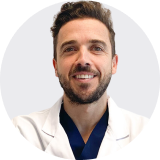
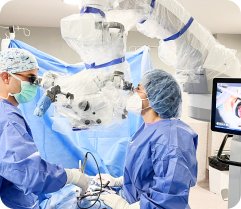
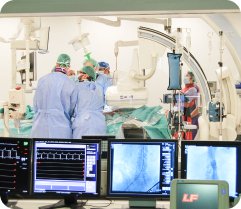
Ribera’s Traumatology Department is led by a team of renowned specialists with extensive experience in orthopedics, sports medicine, and musculoskeletal surgery. Our experts are at the forefront of innovation, utilizing cutting-edge technology and advanced techniques to deliver world-class care.




Facilities
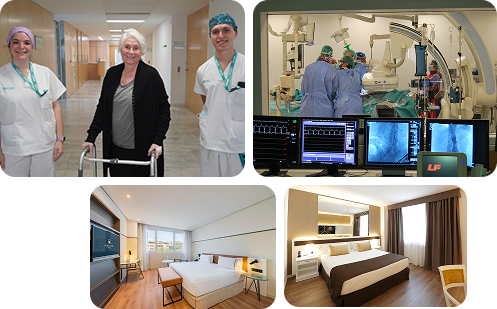
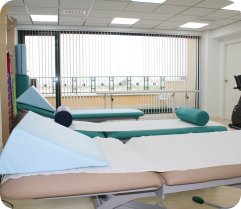
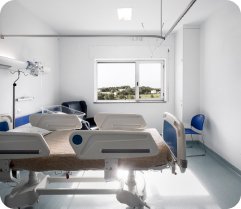
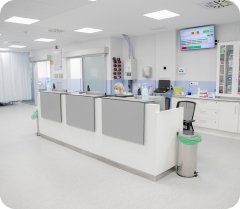
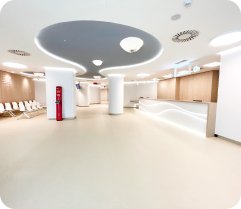
Our hospitals and centers are equipped with cutting-edge technology and modern installations designed to deliver the highest standards of medical care. We offer comfortable patient rooms, welcoming environments, and amenities tailored to ensure a smooth and stress-free healthcare experience for you and your loved ones.






Why Choose Ribera for Your Joint Replacement Surgery?
At Ribera Health Group, we combine expertise, innovation, and patient-centered care to deliver the best possible outcomes for joint replacement surgeries. Here’s why Ribera is your trusted partner for orthopedic care:

World-Class Expertise
Our highly skilled orthopedic surgeons and musculoskeletal specialists have extensive experience in performing hip, knee and shoulder, replacements. With a commitment to excellence, we provide personalized, effective treatments designed for long-term success.

State-of-the-Art Technology
Ribera centers are equipped with the latest advancements in orthopedic surgery, including robotic-assisted procedures, 3D imaging, and minimally invasive techniques. This ensures precise implant placement, reduced recovery times, and improved mobility for our patients.

Specialized Orthopedic Care
Joint replacement surgery at Ribera is just one part of our holistic approach to musculoskeletal health. We offer a seamless experience to support your full recovery and long-term joint health with personalized rehabilitation plans and follow-up care.

Patient-Centered Approach
Your comfort and well-being are our top priorities. Our dedicated care teams take the time to understand your goals, answer your questions, and provide compassionate guidance throughout every step of your joint replacement journey.

International Patient Support
For our international patients, we offer specialized services, including multilingual support, travel assistance, and personalized medical coordination. We ensure that accessing world-class orthopedic care is smooth, stress-free, and tailored to your needs.

Proven Results
With a track record of successful joint replacements, Ribera is proud to offer surgeries that significantly enhance quality of life. Our focus on patient outcomes ensures that you receive the exceptional care you deserve.
What our patients say about us


Other treatments:
Trust in world-class orthopedic care at Ribera
Receive a personalized treatment plan and start your journey to better joint health today.


