

An anterior cruciate ligament (ACL) tear is one of the most common knee injuries, especially among people who play sports or lead an active lifestyle. When this key ligament is damaged, it can affect stability, mobility, and confidence in every step. At Ribera Care International in Spain, patients from across Europe choose advanced ACL tear surgery to recover movement and return to normal life, safely and effectively.
If you’re considering ACL reconstruction surgery or want to understand what recovery really looks like, this guide explains every stage: before, during, and after the operation, and how our orthopedic experts help you get back on your feet faster.
Understanding an ACL Tear
The anterior cruciate ligament is one of the main stabilizing ligaments of the knee. It connects the thigh bone (femur) to the shin bone (tibia) and helps control rotation and forward movement.
An ACL tear occurs when this ligament is stretched or torn due to a sudden change of direction, landing incorrectly from a jump, or direct impact to the knee. It’s common in sports like football, basketball, or skiing, but can also happen in everyday situations such as slipping or twisting awkwardly.
Common symptoms of an ACL tear
Recognizing the signs early is key to prevent long-term damage. The most frequent ACL tear symptoms include:
- A popping sound at the time of injury
- Rapid swelling of the knee joint
- Intense pain and loss of motion
- Instability or “giving way” feeling when walking
- Difficulty bearing weight on the affected leg
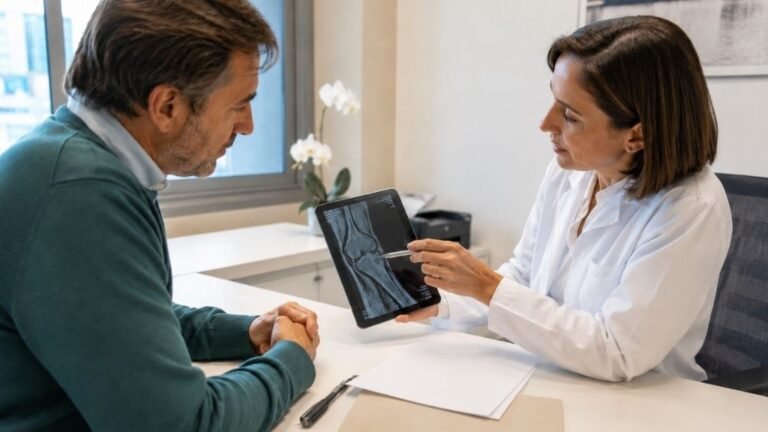
If you experience these symptoms, it’s important to consult an orthopedic specialist. Ribera Care International’s Orthopedics and Traumatology department provides expert diagnosis using advanced imaging and clinical evaluation to determine the severity of the injury.
Diagnosis and Types of ACL Injury
ACL injuries are classified by their severity:
- Grade 1 (Mild stretch): The ligament is stretched but still intact.
- Grade 2 (Partial tear): The ligament fibers are partially torn, causing instability.
- Grade 3 (Complete tear): The ligament is completely ruptured and cannot stabilize the knee.
Diagnosis typically includes a physical exam and MRI scan. This allows doctors to assess whether other knee structures (like the meniscus or collateral ligaments) are affected — something that happens in almost half of ACL injury cases.
Treatment Options for an ACL Tear
Treatment depends on the level of injury, activity level, and patient goals.
Non-surgical management
For partial ACL tears or low-activity patients, physiotherapy and knee bracing may help. Rehabilitation focuses on strengthening surrounding muscles to stabilize the joint. However, long-term effects of an ACL tear without surgery may include recurrent instability and cartilage damage that can lead to early arthritis.
ACL tear surgery (reconstruction)
When the ligament is completely torn or instability persists, ACL reconstruction surgery is the gold-standard treatment. The damaged ligament is replaced with a graft, typically taken from the patient’s hamstring or patellar tendon, allowing new tissue to grow and restore full knee stability.
At Ribera Care International hospitals, ACL ligament surgery is performed using minimally invasive arthroscopic techniques, meaning smaller incisions, faster recovery, and reduced postoperative pain.
What to Expect Before ACL Surgery
Pre-operative preparation
Before ACL reconstruction surgery, your orthopedic team will:
- Review medical history and imaging results.
- Explain the surgical plan and anesthesia.
- Recommend pre-surgery physiotherapy (“pre-hab”) to improve muscle tone and range of motion.
Maintaining a good fitness level before surgery is linked to shorter ACL tear surgery recovery time and better long-term results.
Choosing the right center
Many international patients choose Spain and specifically Ribera Care International for orthopedic care due to its combination of top medical expertise, English-speaking support, and affordable prices compared with other European destinations. Ribera hospitals also offer high-quality procedures such as hip replacement, knee replacement, and shoulder surgery, making them trusted centers for musculoskeletal health.
The ACL Reconstruction Surgery Step by Step
1. Anesthesia and arthroscopy
The operation is usually performed under general or spinal anesthesia. Surgeons make small incisions around the knee to insert an arthroscope (a tiny camera) and specialized instruments.
2. Graft preparation
A graft is prepared either from your own tissue (autograft) or from a donor (allograft). This new ligament acts as a scaffold for natural tissue regeneration.
3. Ligament reconstruction
The torn ACL is removed, and tunnels are drilled in the femur and tibia bones to place the graft in the correct position. The graft is fixed with screws or buttons that secure it firmly.
4. Closure and recovery
The incisions are closed with sutures, and a bandage or brace is applied. Most patients go home the same day or after one night in the hospital.
The entire procedure typically lasts 1–2 hours and is considered one of the most successful orthopedic surgeries worldwide.
Recovery After ACL Surgery
Early recovery (first 2 weeks)
- Rest, ice, compression, and elevation to control swelling.
- Use of crutches and knee brace for stability.
- Gentle range-of-motion exercises begin under supervision.
Rehabilitation phase (weeks 3–12)
- Progressive physiotherapy to restore strength and flexibility.
- Stationary bike, pool therapy, and balance training.
- Gradual return to walking without support.
Functional recovery (3–6 months)
- Advanced exercises to rebuild muscle control.
- Running and light sport activities (depending on progress).
- Regular follow-ups with the orthopedic surgeon.
Full recovery (6–9 months)
- Most patients return to sports or demanding activities within 6–9 months.
- Consistency in physiotherapy is key to prevent re-injury.
At Ribera Care International, ACL tear surgery recovery programs are designed individually, combining physical therapy, motion analysis, and advanced rehabilitation technologies to optimize results.
Life After ACL Reconstruction
An ACL tear doesn’t have to end an active lifestyle. With proper treatment and rehabilitation, patients usually regain full knee function and return to sports or daily life without pain.
Long-term outcomes after anterior cruciate ligament tear surgery are excellent, especially when surgery is performed promptly and rehabilitation is well guided. Ribera Care International’s orthopedic surgeons follow evidence-based protocols to minimize the risk of stiffness or graft re-rupture.
It’s important to continue strengthening the muscles around the knee and use proper footwear or a knee brace during high-risk activities to prevent future injuries.
Why Choose Ribera Care International for ACL Surgery in Spain
Ribera Care International offers a patient-centered model where medical excellence meets international coordination. From diagnosis to surgery and recovery, every step is managed in English, with full assistance in travel, accommodation, and paperwork for patients coming from abroad.
Key advantages:
- Experienced orthopedic surgeons specialized in ACL reconstruction surgery.
- Minimally invasive arthroscopic techniques.
- State-of-the-art facilities across Ribera hospitals in Spain.
- Personalized rehabilitation plans with physiotherapists and sports-medicine specialists.
- Assistance for international patients, including travel coordination and medical reporting.
Whether you need ACL ligament surgery or another joint procedure such as hip or knee replacement, Ribera Care International ensures high-quality care and transparent communication at every stage.
An ACL tear can be a life-changing injury, but with modern surgical techniques and comprehensive rehabilitation, full recovery is absolutely achievable. Spain is one of the leading destinations for orthopedic surgery in Europe, and Ribera Care International stands out for its expertise, personalized care, and international support system.
If you’re considering ACL reconstruction surgery or need a second opinion, contact our team to learn how we can guide you through every step of your recovery.
Contact Ribera Care International today to start your journey toward pain-free movement and an active life again.
Frequently Asked Questions about ACL tear
What is an ACL tear?
An ACL tear is a rupture of the anterior cruciate ligament, one of the main ligaments that stabilize the knee joint. It often results from sudden twisting or impact injuries.
How do I know if I need ACL tear surgery?
Surgery is usually recommended for complete tears, athletes, or anyone experiencing knee instability. A specialist will evaluate your case with MRI and physical tests.
What is the ACL tear surgery recovery time?
Most patients recover fully within 6–9 months, depending on physical condition, rehabilitation quality, and adherence to physiotherapy.
Can an ACL tear heal without surgery?
Partial tears may improve with physiotherapy, but complete tears rarely heal on their own. Delaying surgery can lead to chronic instability and joint degeneration.
How much does ACL surgery cost in Spain?
Costs vary depending on hospital, technique, and patient needs. At Ribera Care International, international patients benefit from transparent pricing and all-inclusive care packages. You can request a personalized quote through the contact form.