
Hip arthroscopy may be recommended when hip pain is caused by problems inside the joint, such as femoroacetabular impingement, labral tears, cartilage damage or loose bodies, and symptoms do not improve enough with conservative treatment. It is a minimally invasive procedure that allows the orthopedic surgeon to examine and treat the hip joint through small incisions using a camera and specialized instruments.
For international patients considering private orthopedic surgery in Spain, hip arthroscopy can be an option when the goal is to treat selected joint problems while preserving the natural hip. It is not the same as hip replacement surgery and is usually considered for a different type of patient, diagnosis and stage of hip disease.
This guide is designed to help international patients understand when hip arthroscopy may be recommended, what the procedure involves and how Ribera Care International can support case review and treatment planning in Spain.
Quick answer: Hip arthroscopy may be recommended for selected patients with hip impingement, labral tears, cartilage problems or loose bodies inside the hip joint. It is usually considered when symptoms persist despite physiotherapy, medication, activity modification or other non-surgical treatment.
The decision depends on symptoms, physical examination, X-rays, MRI findings, cartilage condition, patient age, activity level and the orthopedic specialist’s recommendation.
What is hip arthroscopy?
Hip arthroscopy is a minimally invasive orthopedic procedure used to diagnose and treat selected problems inside the hip joint. The surgeon inserts a small camera, called an arthroscope, through a small incision to view the joint and use specialized instruments to treat damaged tissue or abnormal bone shape when appropriate.
The procedure is different from open hip surgery because it uses smaller incisions and is focused on treating specific intra-articular problems. However, it is still a surgical procedure and requires careful diagnosis, specialist planning and structured rehabilitation.
Hip arthroscopy may be discussed with patients who have persistent hip pain, clicking, catching, stiffness or reduced range of motion that has not improved with non-surgical treatment.
When is hip arthroscopy recommended?
Hip arthroscopy may be recommended when the source of pain comes from treatable problems inside the hip joint. The most common reasons include femoroacetabular impingement, labral tears, loose bodies or selected cartilage problems.
It is not suitable for every case of hip pain. Patients with advanced osteoarthritis, severe cartilage loss or joint degeneration may need other treatment options. In some cases, hip replacement surgery in Spain may be more appropriate than hip arthroscopy.
Hip impingement
Femoroacetabular impingement can occur when abnormal contact between the hip bones damages the labrum or cartilage.
Labral tears
The labrum is a ring of cartilage around the hip socket. Tears can cause pain, clicking, catching or instability symptoms.
Loose bodies
Small fragments inside the joint can cause locking, catching or mechanical symptoms in selected patients.
What symptoms can suggest a hip joint problem?
Hip joint problems that may require specialist assessment can cause groin pain, hip stiffness, clicking, catching or pain during sports, walking, sitting or twisting movements. Many patients describe pain deep in the groin rather than on the outer side of the hip.
Symptoms may worsen during activities that involve hip flexion, rotation or impact. Sitting for long periods, getting in and out of a car, running, squatting or changing direction during sport can become difficult.
Because hip pain can also come from the lower back, pelvis, tendons, muscles or abdomen, a detailed orthopedic assessment is important before deciding whether hip arthroscopy is appropriate.
Hip arthroscopy vs hip replacement: what is the difference?
Hip arthroscopy and hip replacement are different procedures used for different types of hip problems. Hip arthroscopy aims to treat selected joint problems while preserving the natural hip, while hip replacement replaces the damaged joint surfaces with artificial components.
Hip arthroscopy may be considered when the hip joint is still suitable for preservation. Hip replacement is more commonly considered when there is advanced osteoarthritis, severe cartilage damage or joint degeneration that cannot be treated effectively with preservation surgery.
| Procedure | Main purpose | When it may be considered |
|---|---|---|
| Hip arthroscopy | Treat selected problems inside the natural hip joint. | Hip impingement, labral tears, loose bodies or selected cartilage problems. |
| Hip replacement | Replace damaged joint surfaces with artificial components. | Advanced hip osteoarthritis, severe joint degeneration or major loss of cartilage. |
Patients comparing treatment options can also read Hip Replacement Surgery: Before, During and After the Procedure and Revision Hip Replacement Surgery: When Is It Necessary?.
How is hip arthroscopy diagnosed and planned?
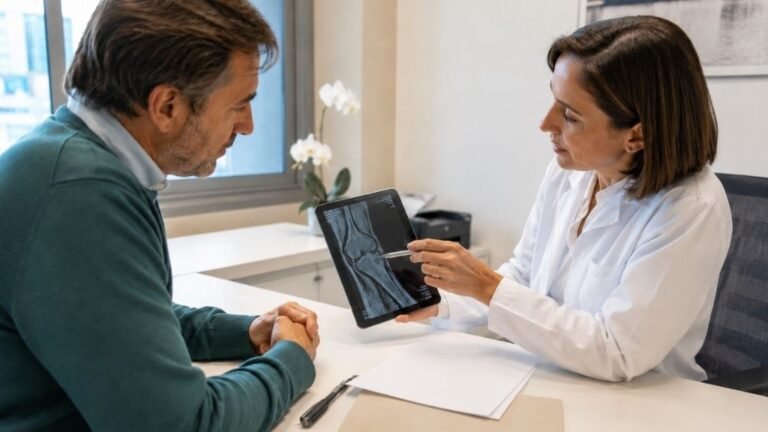
Hip arthroscopy is planned after a specialist assessment that reviews symptoms, physical examination and imaging tests. The orthopedic team may request X-rays, MRI or other imaging to evaluate the labrum, cartilage, bone shape and joint space.
Imaging is important because the success of hip arthroscopy depends on choosing the right patient and confirming that the problem is suitable for joint-preserving surgery. Advanced arthritis or severe cartilage loss can make arthroscopy less appropriate.
International patients should send existing reports, MRI scans, X-rays and previous treatment information before travelling so the case can be reviewed and the next steps can be planned more efficiently.
What happens during hip arthroscopy?
During hip arthroscopy, the surgeon makes small incisions around the hip and introduces a camera into the joint. Specialized instruments are then used to treat the specific problem identified before or during the procedure.
Depending on the diagnosis, the surgeon may repair or trim a labral tear, reshape abnormal bone related to impingement, remove loose bodies or treat selected cartilage damage. The exact surgical plan depends on the patient’s anatomy, diagnosis and intraoperative findings.
The medical team will explain the planned approach, anesthesia, hospital pathway, rehabilitation needs and expected recovery before surgery.
Is hip arthroscopy suitable for all hip pain?
Hip arthroscopy is not suitable for all hip pain. It is designed for selected conditions inside the hip joint and should only be recommended after diagnosis by an orthopedic specialist.
Patients with pain caused mainly by advanced osteoarthritis, severe joint narrowing, referred pain from the spine or non-joint causes may need another treatment pathway. This is why specialist assessment and imaging are essential before planning surgery.
Important: Hip arthroscopy should not be chosen only because it is minimally invasive.
The safest option depends on the diagnosis, cartilage condition, imaging findings, symptoms and the orthopedic specialist’s recommendation.
Recovery after hip arthroscopy
Recovery after hip arthroscopy is gradual and depends on the procedure performed, the patient’s diagnosis, rehabilitation progress and activity goals. Some patients may need crutches for a period after surgery, especially if bone reshaping, labral repair or cartilage treatment has been performed.
Rehabilitation is a key part of recovery. The patient may need physiotherapy to restore mobility, improve strength, protect healing tissues and return progressively to daily activities, work or sport.
Recovery is not the same for every patient. A desk-based worker, an athlete and a patient with long-standing symptoms may all have different recovery timelines and restrictions.
| Recovery area | What patients should know |
|---|---|
| First days | Pain control, wound care, rest and safe movement are usually priorities. |
| Walking | Crutches may be needed depending on the procedure and surgeon’s instructions. |
| Physiotherapy | Rehabilitation helps restore movement, strength and function progressively. |
| Work | Return to work depends on job demands, pain, mobility and medical advice. |
| Sport | Return to sport requires a structured progression and specialist guidance. |
How long does recovery take after hip arthroscopy?
Recovery time after hip arthroscopy varies widely because the procedure can be used for different diagnoses and surgical techniques. Some daily activities may return earlier, while full recovery, sport or high-demand activity may take longer.
The orthopedic team will explain the expected recovery pathway based on the exact procedure performed. Patients should avoid comparing their recovery with others because labral repair, impingement surgery and cartilage treatment may involve different restrictions.
Patients planning surgery abroad should also discuss how long they may need to stay in Spain, when follow-up is recommended and when it may be safe to travel home.
Can international patients travel for hip arthroscopy in Spain?
International patients can travel for hip arthroscopy in Spain when the case has been reviewed, surgery is appropriate and the travel plan allows enough time for assessment, treatment and early recovery. Planning is especially important because hip arthroscopy usually requires rehabilitation and follow-up.
Before booking travel, patients should ask how long they may need to stay, whether crutches will be required, when they can fly and what rehabilitation should continue after returning home. This is particularly relevant for patients travelling from the UK, Ireland or other European countries.
Patients who are preparing for orthopedic surgery abroad may also find this article useful: How to Plan Your Knee or Hip Surgery Abroad.
What documents should patients send before travelling?
Patients should send documents that help the orthopedic specialist understand the diagnosis, severity of symptoms and previous treatment. Complete documentation can help the team prepare a more personalized treatment pathway before the patient travels to Spain.
Useful documents may include:
- Orthopedic report or diagnosis.
- MRI scan and written MRI report.
- Hip X-rays, if available.
- Information about symptoms, pain location and activity limitations.
- Previous physiotherapy or injection treatment information.
- Medication list and allergies.
- Previous hip, spine or pelvic surgery reports.
- Patient goals, such as return to walking, work, sport or daily activity.
For a broader preparation guide, patients can read What Medical Documents Do You Need Before Travelling to Spain for Surgery?.
Planning hip arthroscopy in Spain with Ribera Care International
Ribera Care International supports international patients who need private orthopedic assessment and treatment planning in Spain. Patients can send their medical reports and imaging before travelling so the case can be reviewed and the next steps can be coordinated.
For hip arthroscopy, this support can include communication with the medical team, document preparation, hospital planning and guidance about the treatment pathway. The final recommendation depends on diagnosis, imaging findings, cartilage condition and the orthopedic specialist’s assessment.
Request a hip arthroscopy case review
Send us your orthopedic reports, MRI results or previous diagnosis. Ribera Care International will help coordinate your case review and guide you through the next steps for hip arthroscopy assessment in Spain.
Why choose Ribera Care International for hip arthroscopy in Spain?
Ribera Care International helps international patients access private orthopedic care in Spain with coordinated support before travelling, during hospital planning and throughout the first stages of the treatment pathway.
Orthopedic case review
Patients can send MRI scans, X-rays and reports before travelling so the case can be assessed.
Treatment planning
The pathway is personalized according to symptoms, diagnosis, imaging results and specialist recommendation.
International coordination
The team helps coordinate communication, appointments and hospital planning for patients travelling from abroad.
Patients can learn more about orthopedics and traumatology at Ribera Care International, explore Ribera hospitals in Spain or request a second medical opinion before making a decision.
Request hip arthroscopy assessment in Spain
Hip arthroscopy can be an option for selected patients with hip impingement, labral tears or other treatable problems inside the hip joint. The right treatment depends on diagnosis, imaging findings, cartilage condition, symptoms and recovery goals.
Send your orthopedic reports, MRI results or previous diagnosis to Ribera Care International. Our team will help coordinate your case review and guide you through the next steps for hip arthroscopy planning in Spain.