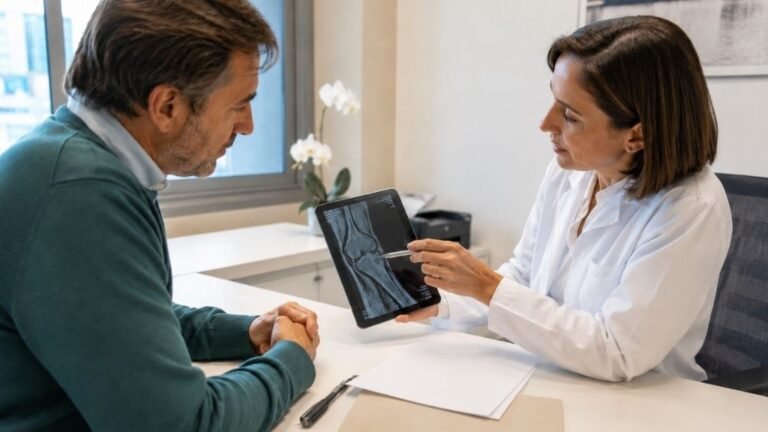


Doctor examining a patient’s wrist for carpal tunnel syndrome

Carpal Tunnel Surgery: Symptoms, Procedure and Recovery Time

Table of Contents

Carpal tunnel surgery may be considered when carpal tunnel syndrome causes persistent numbness, tingling, pain or weakness in the hand and symptoms do not improve with conservative treatment. The procedure is designed to reduce pressure on the median nerve, which passes through the carpal tunnel in the wrist.

For international patients considering private hand or orthopedic surgery in Spain, understanding the symptoms, surgical procedure and recovery time can help prepare better questions before medical assessment. At Ribera Care International, each case is reviewed individually so the medical team can assess the diagnosis, previous treatments, test results and recovery needs before recommending a treatment plan.

Quick answer: Carpal tunnel surgery, also called carpal tunnel release, is a procedure that relieves pressure on the median nerve at the wrist. It may be recommended when symptoms such as numbness, tingling, night pain or hand weakness persist despite non-surgical treatment, or when nerve compression is severe.

Recovery time varies depending on the patient’s symptoms before surgery, occupation, hand use and healing process.

Tell us about your case

What is carpal tunnel syndrome?

Carpal tunnel syndrome is a condition caused by pressure on the median nerve as it passes through the wrist. The median nerve helps provide sensation and movement to parts of the hand, so compression can cause symptoms in the fingers, hand and sometimes the forearm.

The carpal tunnel is a narrow passageway in the wrist. It contains tendons and the median nerve. When there is swelling, irritation or reduced space inside this tunnel, the nerve can become compressed. This can lead to numbness, tingling, pain or weakness that may gradually worsen over time.

Carpal tunnel syndrome can affect daily activities such as writing, typing, holding objects, driving, using a phone or sleeping comfortably. Some patients first notice symptoms at night or when the wrist stays in the same position for a long time.

What are the symptoms of carpal tunnel syndrome?

The most common symptoms of carpal tunnel syndrome include numbness, tingling, pain and weakness in the hand. Symptoms often affect the thumb, index finger, middle finger and part of the ring finger.

Some patients describe a sensation of pins and needles, burning, electric-like discomfort or hand clumsiness. Symptoms may come and go at first, but they can become more constant if nerve compression progresses.

Numbness or tingling

Patients may feel numbness or pins and needles in the thumb, index, middle or ring finger.

Night symptoms

Symptoms often become more noticeable at night and may wake the patient from sleep.

Hand weakness

Some patients may drop objects or notice reduced grip strength in the affected hand.

When should patients seek medical assessment?

Patients should seek medical assessment when symptoms persist, worsen or interfere with sleep, work or daily activities. Early assessment is important because long-standing nerve compression may take longer to recover and, in some cases, may not fully improve.

A specialist can assess whether the symptoms are caused by carpal tunnel syndrome or by another condition affecting the neck, shoulder, elbow, wrist or hand. This is important because numbness and tingling in the hand can have different causes.

Patients should also request assessment if they notice constant numbness, muscle weakness, loss of hand coordination or visible wasting of the muscles at the base of the thumb.

How is carpal tunnel syndrome diagnosed?

Carpal tunnel syndrome is usually diagnosed through medical history, physical examination and, in selected cases, nerve tests. The specialist will ask about symptoms, hand use, previous injuries, medical conditions and how long the problem has been present.

The examination may include checking sensation, muscle strength, wrist position and symptoms triggered by specific maneuvers. In some cases, nerve conduction studies or electromyography may be recommended to assess how the median nerve is functioning.

For international patients, sending previous reports or test results before travelling can help the medical team understand the case and decide whether additional assessment may be needed in Spain.

When is carpal tunnel surgery recommended?

Carpal tunnel surgery may be recommended when symptoms are severe, persistent or do not improve with conservative treatment. Surgery may also be considered when tests show significant nerve compression or when there is weakness, constant numbness or muscle changes.

Non-surgical treatment may include wrist splints, activity modification, medication, hand therapy or steroid injection, depending on the patient’s case. However, if symptoms continue or nerve compression is advanced, the specialist may recommend surgical release.

Important: Carpal tunnel surgery is not recommended only because a patient has wrist pain.

The diagnosis should be confirmed by a specialist, and the decision should be based on symptoms, examination, previous treatment and, when needed, nerve test results.

What happens during carpal tunnel surgery?

Carpal tunnel surgery aims to relieve pressure on the median nerve by releasing the ligament that forms the roof of the carpal tunnel. This creates more space inside the tunnel and reduces compression on the nerve.

The procedure is commonly known as carpal tunnel release. Depending on the patient’s case and the surgeon’s recommendation, it may be performed using different surgical approaches. The medical team will explain the planned technique, anesthesia, incision care and recovery instructions before surgery.

Carpal tunnel surgery is often performed as a short-stay or outpatient procedure, although the exact pathway depends on the patient’s health, surgical plan and hospital protocol.

Open vs endoscopic carpal tunnel surgery

Carpal tunnel release can be performed using open or endoscopic techniques, depending on the patient’s case and the surgeon’s assessment. Both approaches aim to reduce pressure on the median nerve.

Approach What it means Important considerations
Open carpal tunnel release The surgeon makes an incision in the palm or wrist area to release the ligament. It is a widely used technique and allows direct visualization of the ligament.
Endoscopic carpal tunnel release The surgeon uses a small camera and instruments to release the ligament through a smaller incision. Suitability depends on the patient’s anatomy, diagnosis and the surgeon’s recommendation.

The best approach depends on the patient’s symptoms, medical history, anatomy, surgeon experience and clinical assessment. Patients should ask which technique is recommended in their case and why.

How long does carpal tunnel surgery take?

Carpal tunnel surgery is usually a relatively short procedure, but the total time at the hospital may be longer because of preparation, anesthesia, monitoring and discharge instructions. The exact duration depends on the surgical plan and the patient’s medical condition.

Before surgery, the medical team will explain what time the patient should arrive, whether fasting is needed, what type of anesthesia is planned and when they may be able to return to their accommodation or home.

What is recovery like after carpal tunnel surgery?

Recovery after carpal tunnel surgery varies from patient to patient. Some symptoms, especially night tingling or pain, may improve relatively quickly, while strength, tenderness and full hand function can take longer to recover.

Patients usually receive instructions about wound care, hand elevation, finger movement, dressing changes, pain control and when to attend follow-up. The surgical team may also give guidance about returning to work, driving, lifting and daily activities.

Recovery can be slower in patients who had severe or long-standing nerve compression before surgery. In these cases, nerve healing may take more time and symptoms may not disappear completely.

Carpal tunnel surgery recovery time

Carpal tunnel surgery recovery time depends on the patient’s symptoms before surgery, the hand operated on, job demands, wound healing and the type of activities the patient needs to return to.

Recovery area What patients should know
First days Patients may need to keep the hand elevated, move the fingers gently and protect the wound.
Daily activities Light activities may return gradually, depending on pain, dressing, wound care and medical instructions.
Work Return to work depends on whether the job involves desk work, driving, manual tasks, vibration tools or heavy lifting.
Grip strength Grip strength may take weeks or months to improve, especially if symptoms were severe before surgery.
Full recovery Full recovery can vary widely and may take longer when nerve compression was present for a long time.

How can patients support recovery?

Patients can support recovery by following the surgeon’s instructions and avoiding activities that place excessive strain on the hand too early. Good wound care, finger movement and gradual return to activity are usually important parts of the recovery process.

Protect the wound

Keep the wound clean and dry according to the instructions provided by the medical team.

Move the fingers

Gentle finger movement may help reduce stiffness, unless the surgeon gives different instructions.

Return gradually

Work, driving, lifting and sports should be resumed according to medical guidance and symptom progress.

What documents should international patients send before surgery?

International patients should send medical documents that help the specialist confirm the diagnosis and understand the severity of symptoms. This is especially useful before travelling to Spain for planned surgery.

Useful documents may include:

  • Medical report from a hand surgeon, orthopedic specialist, neurologist or general physician.
  • Description of symptoms and how long they have been present.
  • Nerve conduction study or electromyography results, if available.
  • Previous treatment information, such as splints, injections or therapy.
  • Medication list and allergies.
  • Relevant medical history, including diabetes, thyroid disease or inflammatory conditions.
  • Information about previous wrist, hand, elbow or neck problems.
  • Preferred travel dates, if already known.

Patients who are preparing for surgery abroad may also find this guide useful: what medical documents do you need before travelling to Spain for surgery?

Carpal tunnel surgery in Spain for international patients

International patients considering carpal tunnel surgery in Spain can send their medical information before travelling so the case can be reviewed. Ribera Care International helps coordinate communication, documentation, specialist assessment and treatment planning for patients travelling from abroad.

Patients can also learn more about Ribera’s orthopedic and traumatology teams, explore the Ribera hospitals in Spain or request a second medical opinion before making a decision.

Request a carpal tunnel surgery assessment

Send us your medical reports and test results. Ribera Care International will review your case and help you understand your treatment options, hospital care and recovery pathway in Spain.

Tell us about your case

FAQs about carpal tunnel surgery

What is carpal tunnel surgery?

Carpal tunnel surgery is a procedure that relieves pressure on the median nerve at the wrist. It usually involves releasing the ligament that forms the roof of the carpal tunnel.

When is carpal tunnel surgery recommended?

Carpal tunnel surgery may be recommended when symptoms are severe, persistent or do not improve with conservative treatment. It may also be considered when there is nerve damage, constant numbness, weakness or muscle changes.

How long does it take to recover from carpal tunnel surgery?

Recovery time varies. Some symptoms may improve quickly, while grip strength and full hand function can take weeks or months, especially if nerve compression was severe or long-standing.

Can carpal tunnel syndrome come back after surgery?

It can happen, although many patients experience long-term symptom improvement. Recurrence or persistent symptoms may depend on the original severity, nerve condition, healing process and other medical factors.

Will I need physiotherapy after carpal tunnel surgery?

Some patients may benefit from hand therapy or rehabilitation guidance, especially if there is stiffness, weakness or difficulty returning to daily activities. The surgeon will advise what is needed in each case.

Can I travel to Spain for carpal tunnel surgery?

Yes. International patients can contact Ribera Care International to send their medical reports and request a case review before travelling for private surgery in Spain.

What tests are needed before carpal tunnel surgery?

The specialist may request nerve conduction studies, electromyography or other tests depending on the symptoms and examination. Not every patient needs the same tests before surgery.

*This article is for informational purposes and is intended to help patients understand common postoperative precautions after cataract surgery before discussing their recovery plan with an ophthalmologist.

Share:

Categories

Latest posts

Eye examination after cataract surgery recovery
What Not to Do After Cataract Surgery: Driving, Alcohol, Exercise and Screen Time
Doctor examining a patient’s wrist for carpal tunnel syndrome
Carpal Tunnel Surgery: Symptoms, Procedure and Recovery Time
Eye examination before choosing a cataract lens for surgery
Monofocal vs Multifocal vs Trifocal Lens: Which Cataract Lens Is Right for You?
Doctor reviewing medical documents with a patient before surgery in Spain
What Medical Documents Do You Need Before Travelling to Spain for Surgery?
Patient after knee replacement surgery in Spain
Knee Replacement Cost in Spain: What International Patients Should Know
Patient receiving rehabilitation support after hip replacement surgery in Spain
Hip Replacement Cost in Spain: What Can Affect the Final Price?
ENT consultation for septoplasty surgery in Spain
Septoplasty Surgery: Procedure, Recovery and When It Is Recommended
Gynecology consultation for hysterectomy surgery options in Spain
Hysterectomy Options: Vaginal, Laparoscopic or Abdominal: Which Is Best?
Orthopedic surgeon in Spain reviewing a hip replacement X-ray with a patient
Revision Hip Replacement Surgery: When Is It Necessary?
Orthopedic surgeon in Spain reviewing a knee scan with a patient
How to Choose the Best Orthopedic Surgeon in Spain

Request for a call

If you’d like to speak to someone on the phone about Ribera Health Group’s international patient services, please leave us your details and we’ll give you a call as soon as possible.

Dr. José Lizón, orthopedic spine surgeon
Dr. José Lizón

Dr. José Lizón is an orthopedic spine surgeon specializing in minimally invasive techniques, with a medical degree from the University of Oviedo. Throughout his career, Dr. Lizón has distinguished himself for his expertise in endoscopic spine surgery, playing a key role in advancing this technique in Spain.

Languages spoken: Spanish (native), English (intermediate)

Specialties:

  • Endoscopic spine surgery
  • Endoscopic treatment of disc herniation and spinal canal stenosis
Dr. Gerd Bordon, orthopedic spine surgeon

Dr. Gerd Bordon

Dr. Gerd Bordón is an orthopedic spine surgeon specializing in minimally invasive techniques. He graduated from the Free University of Berlin and completed his residency at Hospital Universitario La Fe in Valencia, where he later worked as a spine surgeon from 2007 to 2011. He furthered his training in endoscopic and minimally invasive spine surgery in Germany under Dr. D. Rosenthal, and earned his PhD from the University of Giessen in 2007. He has authored key publications on thoracoscopic disc surgery and complex spinal deformity correction. Dr. Bordón currently serves as Head of the Spine and Back Unit at Hospital Ribera IMSKE.

Languages spoken: German (native), Spanish (intermediate), English (intermediate)

Specialties:

  • Minimally invasive spine surgery
  • Scoliosis
  • Spinal canal stenosis
  • Spondylolisthesis
  • Cervical disc herniation
  • Lumbar disc herniation
  • Back rehabilitation
doctor david fernandez en ribera salud
Dr. David Fernández Fernández

Dr David Fernández-Fernández is a Specialist in Orthopaedic Surgery and Traumatology, with a clinical practice focused on hip and knee joint replacement, joint reconstruction and complex trauma surgery. He integrates minimally invasive hip surgery, robotic-assisted hip and knee surgery and personalised 3D surgical planning, with more than 5,000 procedures performed and surgical experience since 2011.

His practice also includes personalised rapid-recovery protocols in hip and knee surgery, developed and refined by his team to reduce surgical impact, optimise pain control and allow patients to walk on the same day as surgery. He also has experience in joint regenerative medicine, cartilage preservation and biological therapies, including PRP, cellular therapies and hyaluronic acid, aimed at reducing pain, improving function and preserving the joint whenever possible.

He is a member of the Joint Reconstruction and Hip Surgery Unit and the Hand Surgery and Complex Cases Unit at Hospital Universitario del Vinalopó, Elche (Alicante), and Coordinator of the Orthopaedic Surgery and Traumatology Unit at Clínica Ciudad Quesada, Rojales (Alicante). He also performs clinical and surgical activity in other hospital centres across Alicante and the Region of Murcia, and is author and co-author of numerous national and international publications and specialised book chapters.

Languages spoken: Spanish (native), English (intermediate), French (basic)

Specialties:

  • Hip and knee joint replacement surgery
  • Joint reconstruction surgery
  • Minimally invasive hip surgery
  • Robotic-assisted hip and knee surgery
  • Revision arthroplasty and complex cases
  • Personalised surgical planning and 3D reconstruction
  • Rapid-recovery protocols
  • Complex trauma and advanced hand surgery
  • Joint regenerative medicine and cartilage preservation


Dr. Pedro Galindo Fernández, general and oncological surgeon

Dr. Pedro Galindo Fernández

Dr. Pedro Galindo Fernández is a renowned general surgeon specializing in breast surgery and oncological surgery. With extensive experience and advanced training, he is recognized for his expertise in minimally invasive techniques and complex breast pathology procedures.

Dr. Galindo Fernández obtained his medical degree from the University of Murcia, where he also completed his surgical residency. To further specialize, he pursued a Master’s in Mastology and Breast Pathology at the Universidad Internacional Menéndez Pelayo, the only program accredited by the Fundación de Estudios Mastológicos (FEMA) in Spain. His dedication to continuous medical advancements has positioned him as a leader in breast cancer surgery and reconstructive procedures.

Languages spoken: Spanish and English

Specialties:

  • Breast Surgery and Mastology
  • Oncological Surgery
  • Minimally Invasive and Laparoscopic Surgery
  • Soft Tissue and Tumor Surgery
  • Endocrine Surgery
  • Hernia and Abdominal Wall Surgery

Hospital Ribera HCMiraflores

Hospital HCMiraflores is a leading healthcare facility known for its advanced medical services and patient-centered care. Equipped with state-of-the-art technology and a team of highly qualified professionals, the hospital offers a wide range of specialties to meet the diverse healthcare needs of patients.

Location:

Zaragoza

Year opened:

2020

Operating rooms:

8

Employees:

181

External consultations annually:

10,524

Surgeries annually:

194,266

Hospital Ribera Polusa

Hospital Ribera Polusa, located in Lugo, is a trusted private hospital offering high-quality medical care across a wide range of specialties. With advanced technology and a dedicated team of professionals, it provides personalized treatments to ensure the best outcomes.

Location:

Lugo, Galicia, Spain

Year opened:

1981

Operating rooms:

5

Employees:

156

External consultations annually:

44.014

Surgeries annually:

4,604

Clínica Assistens Coruña

Clínica Assistens, located in A Coruña’s Matogrande area, offers a wide range of medical specialties, including general medicine, surgery, and psychotherapy. With a focus on personalized care and state-of-the-art services, it is dedicated to providing high-quality healthcare to its patients.

Location:

A Coruña, Galicia, Spain

Year opened:

2023

Operating rooms:

2

Employees:

50

External consultations annually:

88.477

Surgeries annually:

_

Clínica Ribera Ciudad Quesada

Clínica Ribera Ciudad Quesada is a private healthcare facility offering over 20 medical and surgical specialties, including cardiology, gynecology, and physiotherapy. Equipped with state-of-the-art diagnostic technology, the clinic provides immediate, high-quality care without waiting times.

Location:

Rojales, Alicante, Spain

Year opened:

2023

Operating rooms:

1

Employees:

22

External consultations annually:

9.550

Surgeries annually:

100

Hospital Ribera Caravaca

Hospital Ribera Caravaca provides 24/7 emergency care, general medicine, and advanced diagnostic services with state-of-the-art technology. Established in 1972 and integrated into the Ribera Health Group in 2022, it is committed to high-quality, patient-centered care and actively supports community health initiatives.

Location:

Caravaca de la Cruz, Murcia

Year opened:

1972

Operating rooms:

1

Employees:

97

External consultations annually:

2,791

Surgeries annually:

2,481

Hospital Ribera de Molina

Hospital Ribera de Molina is a private healthcare facility offering a comprehensive range of medical and surgical services. It has become a regional benchmark for quality healthcare. Equipped with modern technology and a dedicated team of professionals, it has been recognized for its commitment to excellence.

Location:

Molina de Segura, Murcia, Spain

Year opened:

2000

Operating rooms:

6

Employees:

195

External consultations annually:

13,870

Surgeries annually:

13,839

Hospital Ribera Juan Cardona

Hospital Ribera Juan Cardona, located in Ferrol, is a well-established private hospital providing comprehensive medical and surgical services. Equipped with modern technology and a skilled team of professionals, it offers high-quality, patient-centered care.

Location:

Ferrol, Galicia, Spain

Year opened:

1974

Operating rooms:

5

Employees:

289

External consultations annually:

57,056

Surgeries annually:

5,138

Hospital Ribera Povisa

Hospital Ribera Povisa is one of the largest private hospitals in Europe, renowned for its comprehensive medical services and cutting-edge technology. Located in Vigo, it serves as a benchmark for specialized care and advanced treatments across multiple disciplines.

Location:

Vigo, Galicia, Spain

Year opened:

1973

Operating rooms:

14

Employees:

1387

External consultations annually:

421,751

Surgeries annually:

17,141

Hospital Ribera Virgen de la Caridad

Hospital Ribera Virgen de la Caridad is a renowned healthcare center offering high-quality, patient-focused medical care across various specialties. Equipped with advanced technology and led by a team of skilled professionals, it ensures exceptional care and outcomes.

Location:

Cartagena, Murcia, Spain

Year opened:

2018

Operating rooms:

5

Employees:

530

External consultations annually:

186,960

Surgeries annually:

6,161

Hospital Ribera Covadonga

Hospital Ribera Covadonga is a trusted healthcare facility known for its patient-centered approach and comprehensive medical services. With a highly skilled team and modern infrastructure, it delivers personalized care across a range of specialties.

Location:

Gijón, Asturias, Spain

Year opened:

1915

Operating rooms:

3

Employees:

100

External consultations annually:

80,000

Surgeries annually:

3,000

Hospital Ribera IMSKE

Hospital Ribera IMSKE is a leading center for musculoskeletal health, specializing in advanced treatments for orthopedic, sports, and rheumatologic conditions. Equipped with state-of-the-art technology and a multidisciplinary team, it offers personalized care to ensure optimal recovery and patient satisfaction.

Location:

Valencia, Spain

Year opened:

2020

Operating rooms:

5

Employees:

100

External consultations annually:

28,860

Surgeries annually:

3,500

Dr. Pilar Serrano, general and digestive surgeon

Dr. Pilar Serrano

Dr. Pilar Serrano is a General and Digestive Surgery Department Head at Ribera. A graduate of the University of Alicante, she holds a Doctorate in Medicine and Surgery, awarded Cum Laude and with an Extraordinary Doctorate Prize. Dr. Serrano completed her residency in General and Digestive Surgery at the General University Hospital of Elche, where she also served as a specialist before joining Hospital Universitario del Vinalopó in 2010 as Head of the Department. She leads the accredited Coloproctology Unit and has spearheaded the implementation of national quality indicators for colorectal cancer care across multiple Ribera hospitals. Dr. Serrano is also the President of the Digestive Tumor Committee and has been recognized for her innovative contributions, including awards like the “Isabel Ferrer” Prize and the Top 20 Award for Best General and Digestive Surgery Service.

Languages spoken: Spanish and English

Specialties:

  • Hepatobiliary Surgery
  • Colorectal Surgery
  • Bariatric and Metabolic Surgery
  • Esophagogastric Surgery
  • Breast Surgery
  • Bloodless Surgery
Dr. José Gil Martínez, general and digestive surgeon

Dr. José Gil Martínez

Dr. José Gil Martínez is a highly qualified General and Digestive Surgeon, dedicated to delivering advanced medical care with a focus on patient well-being. With a robust academic and professional background, he is a trusted expert in his field. He holds a Medical Degree in Medicine and Surgery, a specialization in General and Digestive Surgery, and a Ph.D. from the University of Murcia. He brings advanced expertise in Coloproctology and Peritoneal Carcinomatosis, ensuring exceptional care and outcomes for his patients.

Languages spoken: Spanish

Specialties:

  • General and Digestive Surgery
  • Coloproctology (colon, rectum, and anus conditions)
  • Management of Peritoneal Carcinomatosis
  • Advanced surgical techniques for digestive health
Dr. Antonio Climent Aira, general and digestive surgeon

Dr. Antonio Climent Aira

Dr. Antonio Climent Aira is an accomplished General Surgeon with over three decades of experience in surgical practice and leadership. He holds a degree in Medicine from the University of Santiago de Compostela and completed his specialization in General Surgery at the Complexo Hospitalario Xeral – Cíes in Vigo. Dr. Climent Aira has advanced expertise in Coloproctology and colorectal and pelvic floor surgery, supported by a Master’s degree from the University of Zaragoza. A founding member of the Galician Group of Coloproctology, he has contributed extensively to research, education, and the advancement of surgical practices.

Languages spoken: Spanish

Specialties:

  • General Surgery
  • Colorectal and Pelvic Floor Surgery (Coloproctology)
  • Minimally Invasive Techniques in Digestive Surgery
  • Infection Control in Surgical Practice
  • Leadership in General Surgery Departments
Dr. José Albors Martín, cardiac surgeon

Dr. José Albors Martín

Dr. José Albors Martín is a highly regarded cardiac surgeon and a Cardiac Surgery Department Head at Ribera. After earning his medical degree from the University of Valencia in 2003, he completed his specialization in Cardiovascular Surgery at the Hospital Clínico Universitario de Valencia in 2010. Joining the Vinalopó and Torrevieja University Hospitals in 2011 as a cardiac surgery specialist, he was appointed Head of Cardiac Surgery at Vinalopó in 2020. A principal investigator in the ROMA trial on coronary surgery since 2020, Dr. Albors also achieved accreditation from Harvard Medical School’s Surgical Leadership Program in 2022, reflecting his commitment to advancing cardiac care and leadership.

Languages spoken: Spanish and English

Specialties:

  • Cardiac Surgery
  • Coronary Surgery
  • Minimally Invasive Techniques
  • Surgical Leadership
  • Clinical Research
Dr. Luis González, cardiologist and electrophysiology specialist

Dr. Luis González

Dr. Luis González is an accomplished cardiologist with extensive expertise in electrophysiology and acute cardiac care. He earned his medical degree from the University of Seville and completed his cardiology specialization at the Virgen Macarena University Hospital in Seville. His academic achievements include a Master’s in Biomedical Research from the University of Seville, a Master’s in Acute Cardiac Care from the Spanish Society of Cardiology and UCAM, and a Master’s in Diagnostic and Therapeutic Cardiac Electrophysiology from CEU San Pablo University. Additionally, he has specialized training in atrial fibrillation from the University of Santiago de Compostela and holds European accreditation in Interventional Clinical Cardiac Electrophysiology from the European Society of Cardiology and EHRA.

Languages spoken: Spanish and English

Specialties:

  • Cardiac Electrophysiology
  • Atrial Fibrillation Management
  • Acute Cardiac Care
  • Clinical Cardiology
  • Cardiac Interventional Procedures
Dr. Manuel Carnero, adult cardiac surgeon

Dr. Manuel Carnero

Dr Manuel Carnero is an Adult Cardiac Surgeon at Ribera. His expertise is in arrhythmia surgery, minimally invasive procedures and heart failure treatment. Manuel is a member of the scientific committee of the Spanish National Registry of Cardiovascular Surgery. Manuel has a Postdoctoral master’s degree in Research Methodology and Statistics and is a statistical reviewer for EJCTS and ICVTS as well as a member of the editorial board of Revista Española de Cardiología. Manuel has a postdoctoral master’s degree in Clinical Management and is the Quality Manager of the Cardiac Surgery Department at the Hospital Clínico San Carlos. Manuel also has a postdoctoral master’s degree in echocardiography. Manuel is also a member of EACTS and the Spanish Society of Cardiology, former General Secretary of the Spanish Society of Cardiovascular and Endovascular Surgery, and Investigator for the Spanish National Center for Cardiovascular Research (CNIC).

Manuel has authored 147 manuscripts as first author or collaborator.
ORCID ID: 0000-0001-5045-576.

Languages spoken: Spanish

Specialties:

  • Adult Cardiac Surgery
  • Arrhythmia Surgery
  • Minimally Invasive Cardiac Procedures
  • Heart Failure Treatment
  • Echocardiography
  • Quality Management in Cardiac Surgery
Dr. Carlos De Diego Rus, cardiologist

Dr. Carlos De Diego Rus

Dr. Carlos De Diego Rus is a distinguished cardiologist specializing in electrophysiology and arrhythmias. He earned his medical degree from the Autonomous University of Madrid, where he also completed his cardiology specialization at the prestigious Fundación Jiménez-Díaz. Further honing his expertise, Dr. De Diego trained in electrophysiology and arrhythmia management at the University of California, Los Angeles (UCLA), and in Madrid. Since January 2018, he has served as a Head of Cardiology at Ribera, where he leads advancements in heart health with a focus on cutting-edge treatment and patient care.

Languages spoken: Spanish and English

Specialties:

  • Electrophysiology
  • Arrhythmia Management
  • Cardiology
  • Advanced Cardiac Procedures
  • Leadership in Cardiology

Dr. Ignacio Valenciano BilbaoMuñoz Criado

Dr. Ignacio Valenciano Bilbao is a highly experienced orthopedic surgeon with a career spanning over two decades in both public and private healthcare sectors. After earning his medical degree from Universidad de Santiago de Compostelaand completing his specialization via MIR at Arquitecto Marcide Hospital in Ferrol, he pursued advanced training in spinal surgery at La Fe Hospital in Valencia and pediatric orthopedics at Niño Jesús Hospital in Madrid. Constantly updating his expertise, Dr. Valenciano specializes in primary and revision prosthetic surgery and advanced arthroscopic techniques. Currently, he serves as a Traumatology Department Head at Ribera.

Languages spoken: Spanish and English

Specialties:

  • Primary and Revision Prosthetic Surgery
  • Navigation-Assisted Surgery
  • Arthroscopic Surgery
  • Traumatology
  • Pediatric Orthopedics
  • Spinal Surgery
Dr. Pedro Antonio Martínez Victorio, orthopedic surgeon

Dr. Pedro Antonio Martínez Victorio

Dr. Pedro Antonio Martínez Victorio is an esteemed orthopedic surgeon with extensive international experience. He completed his specialization in Orthopedic Surgery and Traumatology at Hospital Universitario Virgen de la Arrixaca in Murcia and has pursued advanced training at renowned institutions, including the Royal Liverpool University Hospital and Hospital for Special Surgery in New York. As an invited surgeon, he has performed complex procedures in leading hospitals across Spain and Europe. His expertise spans minimally invasive techniques, sports injuries, and cutting-edge prosthetic innovations, earning him recognition as a leader in orthopedic surgery worldwide.

Languages spoken: Spanish and English

Specialties:

  • Joint Replacement Surgery
  • Sports Traumatology
  • Arthroscopic Surgery
  • Reconstructive Surgery
  • Pediatric Orthopedics
  • Infection Management
Dr. Paulino Sánchez Arteaga, orthopedic surgeon

Dr. Paulino Sánchez Arteaga

Dr. Paulino Sánchez Arteaga is a renowned orthopedic surgeon specializing in advanced reconstructive and robotic knee prosthetic surgery. With international training at prestigious institutions such as the Hospital for Special Surgery in New York where he focused on hip and knee arthroplasty under Dr. Friedrich Boettner, he has become a leader in complex cases requiring cutting-edge technology. Dr. Sánchez is also an expert in sports traumatology, accelerated recovery protocols for hip and knee arthroplasties, and infection prevention. He has authored numerous high-impact publications in national and international journals, contributing significantly to advancements in orthopedic surgery and traumatology.

Languages spoken: Spanish and English

Specialties:

  • Reconstructive Surgery of the Upper Limb
  • Robotic Knee Prosthetic Surgery
  • Sports Traumatology
  • Trauma and Emergency Care
  • Fast-Track Hip and Knee Arthroplasties
  • Infection Prevention in Surgery

Dr. Ignacio Muñoz Criado

Dr. Ignacio Muñoz Criado is an internationally renowned orthopedic surgeon and the Medical Director of one of Ribera’s hospitals. With a distinguished career spanning decades, he has worked with elite athletes, served as the doctor for the Spanish Tennis Federation at Grand Slam tournaments, and contributed to the 1992 Barcelona Olympics. He played a key role in establishing Spain’s first hospital dedicated to the musculoskeletal system. A passionate educator and speaker, Dr. Muñoz has given numerous talks and lectures in Spain, England and the United States and he has collaborated with world-renowned surgeons. His surgical expertise and pursuit of perfection have earned him a reputation as one of the top orthopedic surgeons worldwide.

Languages spoken: Spanish and English

Specialties:

  • Total knee arthroplasty.
  • Total hip arthroplasty.
  • Achilles tendon.
  • Knee ligament reconstruction (ACL). Treatment via arthroscopy.
  • Arthroscopic knee surgery. Meniscectomy.
  • Arthrolysis of major joints.
  • Shoulder arthroscopy.
  • Hip arthroscopy.
  • Hallux valgus (bunion surgery).
  • Dupuytren’s disease.