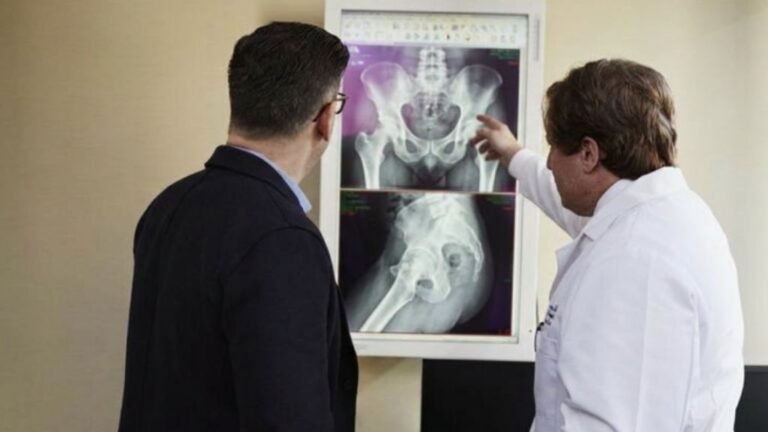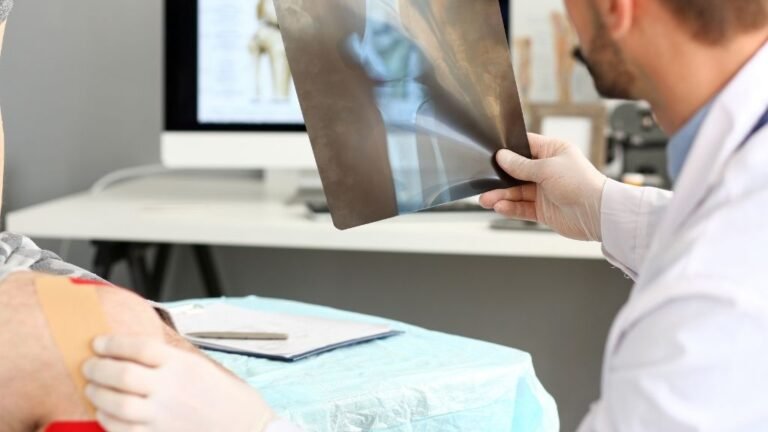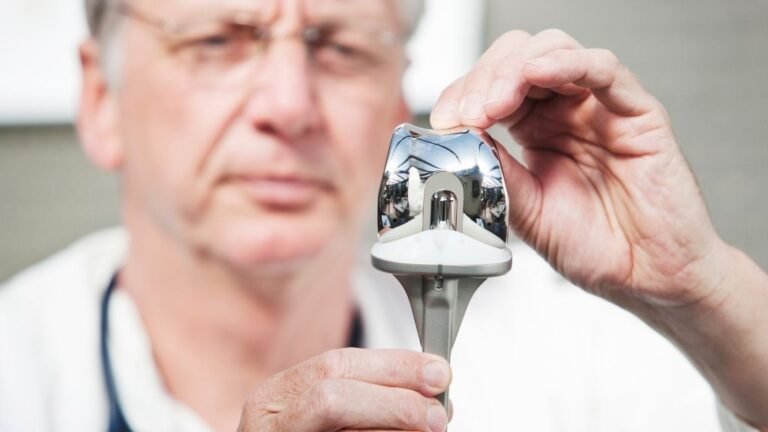
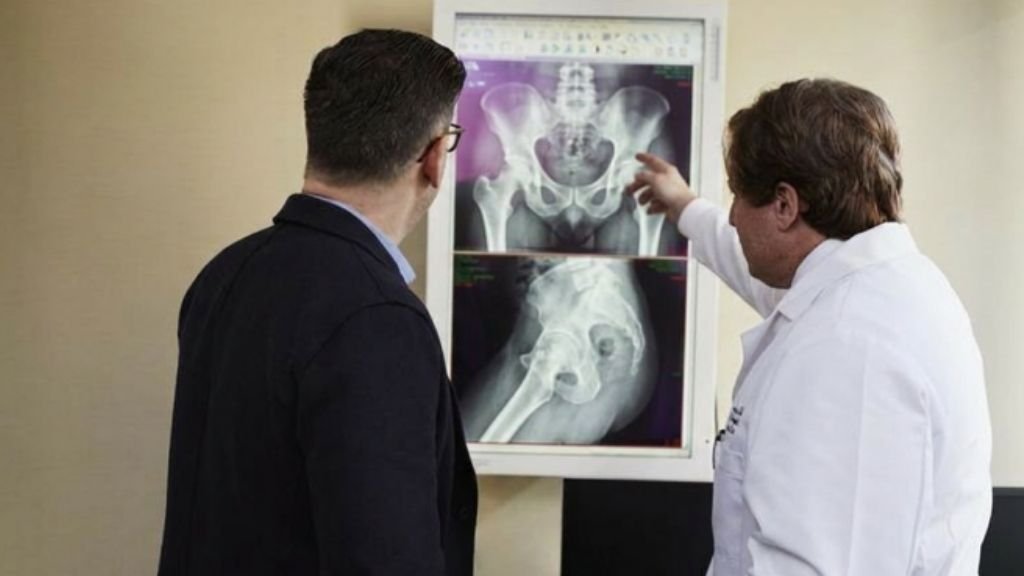
Revision hip replacement surgery may be needed when a previous hip implant no longer works as expected. For international patients considering treatment in Spain, this can be a complex decision that requires careful assessment by an experienced orthopedic team.
Pain, instability, implant wear or reduced mobility after a previous hip replacement should not be ignored. In some cases, symptoms may be managed without surgery, but in others, a second operation may be necessary to replace or correct part of the original implant.
At Ribera Care International, patients from Ireland, the UK and across Europe can access specialized orthopedic assessment in Spain, including support from experienced traumatology teams at centres such as Ribera IMSKE and Hospital Virgen de la Caridad in Murcia.
Quick answer: When is revision hip replacement surgery necessary?
Revision замена тазобедренного сустава surgery may be necessary when a previous hip implant becomes loose, worn, unstable, infected or painful, or when the patient has reduced mobility that affects daily life. The decision should always be based on medical imaging, symptoms, implant condition and specialist assessment.
What is revision hip replacement surgery?
Revision hip replacement surgery is a procedure performed to replace, repair or adjust a previous hip replacement. It is different from a first hip replacement because the surgeon is operating on a joint that has already been treated.
In a primary hip replacement, damaged parts of the hip joint are replaced with artificial components. In revision surgery, one or more of those components may need to be removed and replaced. In some cases, only one part of the implant is affected. In others, the entire prosthesis may need to be revised.
Revision surgery can be more complex than the first operation. The surgeon must assess the existing implant, the surrounding bone, the soft tissues, previous surgical scars and the reason why the original replacement is no longer working well. This is why choosing an experienced orthopedic team is especially important.
Why might a hip replacement need to be revised?
Hip replacement surgery can provide significant improvement for many patients, but implants do not always last forever. Over time, changes can occur in the implant, the surrounding bone or the joint itself. Revision hip replacement may be considered for several reasons.
Implant loosening
One of the most common reasons for revision surgery is implant loosening. This happens when one or more components of the hip replacement no longer remain firmly fixed to the bone.
Patients may notice increasing pain, difficulty walking or a feeling that the hip does not support weight as well as before. Imaging tests help the specialist confirm whether loosening is present.
Implant wear
Hip implants are designed to be durable, but the materials can wear over time. Wear may affect how the joint moves and can sometimes lead to inflammation or bone changes around the implant.
Not all implant wear requires immediate surgery. The decision depends on symptoms, imaging findings and the risk of further damage.
Hip instability or dislocation
Some patients experience instability after hip replacement. This may include repeated dislocation, a feeling that the hip is giving way or fear of certain movements. If instability becomes recurrent or affects quality of life, revision surgery may be considered to improve joint stability.
Infection around the implant
Infection is a serious complication after joint replacement. It can occur soon after surgery or later. Symptoms may include pain, swelling, warmth, fever or wound problems, although signs can vary.
Infection around a hip implant requires specialist assessment. Treatment may involve antibiotics, surgery or staged procedures depending on the case.
Fracture around the implant
A fracture can occur around the hip implant, often after a fall or trauma. This is known as a periprosthetic fracture. Treatment depends on the type of fracture, implant stability, bone quality and the patient’s general health. Some cases require revision surgery.
Persistent pain after hip replacement
Pain after hip replacement does not automatically mean that revision surgery is needed. Pain can have different causes, including muscle weakness, tendon problems, spine conditions, implant issues or infection. The key is to identify the cause correctly before deciding on treatment.
Symptoms that may suggest a hip replacement problem
Patients who have already had hip replacement surgery should seek specialist advice if they experience new or worsening symptoms. Possible warning signs include:
- Pain that increases over time
- Difficulty walking or standing
- Limping that becomes worse
- A sensation of instability
- Repeated hip dislocation
- Swelling, redness or warmth around the hip
- Reduced range of movement
- Pain at rest or during the night
- A change in leg length sensation
- Loss of confidence when using the operated hip
These symptoms do not always mean that revision hip replacement surgery is necessary. However, they should be assessed properly, especially if they persist or worsen.
How is the need for revision hip replacement diagnosed?
The first step is a detailed medical assessment. The orthopedic surgeon will review the patient’s symptoms, previous surgical history and current level of mobility.
For international patients, this process often begins before travelling to Spain. Patients may be asked to send medical reports, previous surgical notes and imaging tests.
Diagnosis may include:
- Review of previous hip replacement records
- Физический осмотр
- X-rays to assess implant position and bone condition
- MRI or CT scans in selected cases
- Blood tests if infection is suspected
- Assessment of pain, walking ability and daily limitations
The goal is to understand why the previous hip replacement is causing problems. Revision surgery should only be recommended when there is a clear reason and when the expected benefits justify the procedure.
Is revision hip replacement more complex than primary hip replacement?
Yes, revision hip replacement is usually more complex than a first hip replacement. This does not mean that every case is high risk, but it does mean that the procedure requires careful planning.
There may be scar tissue from the first operation. The bone may have changed around the implant. The previous components may be difficult to remove. In some cases, the surgeon may need special implants, bone reconstruction techniques or additional fixation.
For this reason, patients should look for an orthopedic team with experience in complex joint replacement and revision surgery. A good revision plan should consider:
- The reason for implant failure
- The condition of the bone
- The type and position of the existing implant
- The patient’s age and general health
- Infection risk
- Mobility goals
- Recovery and rehabilitation needs
Revision hip replacement surgery in Spain for international patients
Spain is an option for international patients who are looking for private orthopedic assessment and treatment abroad. For patients from Ireland, the UK or other European countries, revision hip replacement surgery in Spain may be considered when they want a specialist opinion, a clearer treatment pathway or access to experienced hospital teams.
At Ribera Care International, the process is designed to support patients before, during and after treatment. The journey may include medical document review, specialist consultation, diagnostic tests, treatment planning, hospital coordination and follow-up guidance.
This is particularly important for revision surgery, where the decision must be based on detailed assessment rather than a general recommendation.
Ribera IMSKE and Hospital Virgen de la Caridad in Murcia
Ribera’s orthopedic network includes specialized centres and hospital teams with experience in traumatology and musculoskeletal care.
Ribera IMSKE is a specialist centre focused on orthopedic surgery, traumatology and musculoskeletal conditions. For patients with complex joint problems, sports injuries or advanced orthopedic needs, a specialized environment can help coordinate diagnosis, surgical planning and rehabilitation.
Hospital Virgen de la Caridad in Murcia is also part of the Ribera healthcare network and offers medical and surgical care across different specialties, including orthopedic and traumatology services. For patients considering hip surgery or revision assessment, the connection between hospital care, diagnostic support and specialist teams is an important part of the treatment pathway.
For international patients, Ribera Care International can help identify the most appropriate centre and specialist according to the patient’s diagnosis, previous surgery and medical needs.
Orthopedic specialists within the Ribera network
Revision hip replacement surgery requires careful planning and experience in complex joint assessment. Within Ribera’s orthopedic and traumatology services, international patients may be guided towards different specialists depending on their diagnosis, previous surgery and clinical needs.
| Specialist | Main areas of experience | Why it may be relevant for patients |
|---|---|---|
| Доктор Игнасио Муньос Криадо | Orthopedic surgery, sports medicine, musculoskeletal care and high-performance sports environments. | Relevant for patients who need expert assessment of complex musculoskeletal problems, trauma or sports-related injuries. |
| Доктор Паулино Санчес Артеага | Reconstructive and robotic prosthetic surgery, hip and knee arthroplasty, sports traumatology and accelerated recovery protocols. | Especially relevant for patients considering hip replacement, замена коленного сустава or complex prosthetic surgery. |
| Доктор Педро Антонио Мартинес Викторио | Orthopedic surgery, minimally invasive techniques, sports injuries and prosthetic innovation, with international training experience. | Useful for patients who need advanced assessment for joint, trauma or sports-related conditions. |
| Доктор Игнасио Валенсиано Бильбао | Primary and revision prosthetic surgery, advanced arthroscopic techniques and traumatology department leadership. | Particularly relevant for patients who have already had a hip or knee replacement and need a revision assessment. |
| Доктор Дэвид Фернандес Фернандес | Orthopedic trauma surgery, musculoskeletal conditions, spine surgery and minimally invasive techniques where appropriate. | Relevant when hip pain may overlap with spine or complex musculoskeletal problems requiring broader assessment. |
This network approach allows Ribera Care International to help patients identify the most appropriate orthopedic specialist according to the type of problem, the previous implant history and the complexity of the case.
What happens before revision hip replacement surgery?
Before surgery is recommended, the orthopedic team needs to understand the full history of the previous hip replacement.
International patients should usually prepare:
- Previous surgical reports
- Implant information, if available
- Recent X-rays
- MRI or CT scans, if already performed
- Blood test results
- Current medication list
- Allergy information
- Summary of symptoms and mobility limitations
- Information about previous complications or infections
This information helps the specialist decide whether revision surgery is necessary and what type of revision may be required.
Recovery after revision hip replacement surgery
Recovery after revision hip replacement depends on the complexity of the procedure, the patient’s general health and the reason for revision.
Some patients may recover in a similar way to a first hip replacement. Others may need a longer hospital stay, more careful rehabilitation or additional restrictions during the first weeks.
Patients should ask the orthopedic team:
- How long they may need to stay in hospital
- When they can start walking
- Whether they will need crutches or walking aids
- What physiotherapy will involve
- How long they should remain in Spain before flying home
- What follow-up will be needed after returning home
For international patients, the return travel plan should always be discussed before surgery. Flying home too soon may not be appropriate in some cases, especially after complex revision surgery.
Can revision hip replacement be avoided?
Not every painful hip replacement needs revision surgery. In some cases, symptoms may be managed with physiotherapy, medication, monitoring or treatment of another underlying cause.
However, if there is implant loosening, significant wear, recurrent instability, infection or fracture, revision surgery may become the most appropriate option. The decision should always be individual. A specialist should explain why revision is recommended, what alternatives exist and what recovery may involve.
FAQ: Revision hip replacement surgery
When is revision hip replacement surgery necessary?
Is revision hip replacement more difficult than the first surgery?
Can I travel to Spain for revision hip replacement surgery with Ribera Care International?
How long does recovery take after revision hip replacement?
What documents should I send before travelling to Spain?
Considering revision hip replacement surgery in Spain?
If you have pain, instability or reduced mobility after a previous hip replacement, you should request a specialist assessment. Revision hip replacement surgery is not always necessary, but when it is indicated, careful planning and an experienced orthopedic team are essential.
Ribera Care International helps international patients access orthopedic assessment in Spain, including coordination with specialist teams at centres such as Ribera IMSKE and Hospital Virgen de la Caridad in Murcia.
Свяжитесь с Ribera Care International
Данная статья носит исключительно информационный характер и не может заменить профессиональную медицинскую консультацию. Обязательно проконсультируйтесь с квалифицированным специалистом по поводу вашего индивидуального случая.